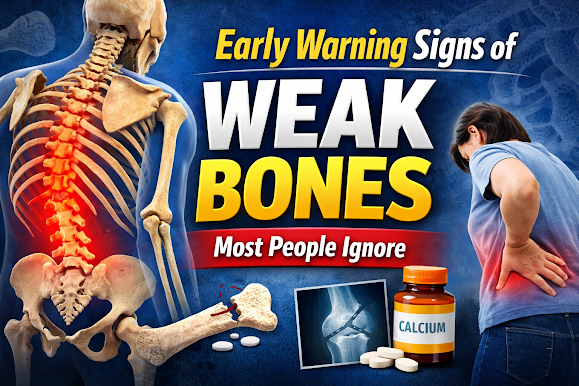
Weak bones are often considered a problem that only affects older adults. However, the reality is that bone health starts declining much earlier—sometimes as early as your 30s. Conditions like Osteoporosis and low bone density can develop silently, without obvious symptoms, until a fracture occurs.
What Causes Weak Bones?
Before diving into the symptoms, it’s important to understand the causes. Weak bones usually result from reduced bone mineral density, which can be triggered by:
- Calcium and Vitamin D deficiency
- Sedentary lifestyle
- Hormonal imbalances
- Aging
- Poor nutrition
Early Warning Signs of Weak Bones Most People Ignore
1. Frequent Back Pain
Persistent back pain may not always be due to muscle strain. It can be a sign of tiny fractures in the spine caused by weakening bones. This is one of the most overlooked signs of weak bones.
2. Loss of Height Over Time
If you’ve noticed that your height has reduced slightly over the years, it could indicate spinal compression fractures—a classic symptom of bone loss.
3. Weak Grip Strength
Difficulty in holding objects or a noticeable decrease in grip strength may reflect declining bone and muscle health. This is an early indicator of poor bone strength.
4. Receding Gums
Surprisingly, your oral health can reveal a lot about your bones. Weak jawbones may cause gums to recede, which is linked to low bone density.
5. Brittle Nails
If your nails break easily or appear weak, it may signal a deficiency in essential nutrients required for strong bones.
6. Easily Fractured Bones
Getting fractures from minor falls or injuries is a major red flag. Healthy bones should withstand everyday stress.
7. Poor Posture or Stooping
A hunched or stooped posture can develop when the spinal bones weaken, commonly seen in people with Osteoporosis.
Who Is at Risk?
Certain individuals are more prone to developing weak bones:
- Women, especially after menopause
- People above 40
- Individuals with a family history of Osteoporosis
- Smokers and alcohol consumers
- People with low physical activity
How to Prevent Weak Bones
1. Maintain a Calcium-Rich Diet
Include foods like milk, yogurt, leafy greens, and almonds to support bone health.
2. Get Enough Vitamin D
Sunlight exposure helps your body absorb calcium effectively.
3. Exercise Regularly
Weight-bearing exercises like walking, jogging, and strength training improve bone strength.
4. Avoid Smoking and Excess Alcohol
These habits accelerate bone loss and weaken overall skeletal health.
5. Regular Bone Health Check-ups
Early screening can detect low bone density before it progresses into serious conditions like Osteoporosis.