
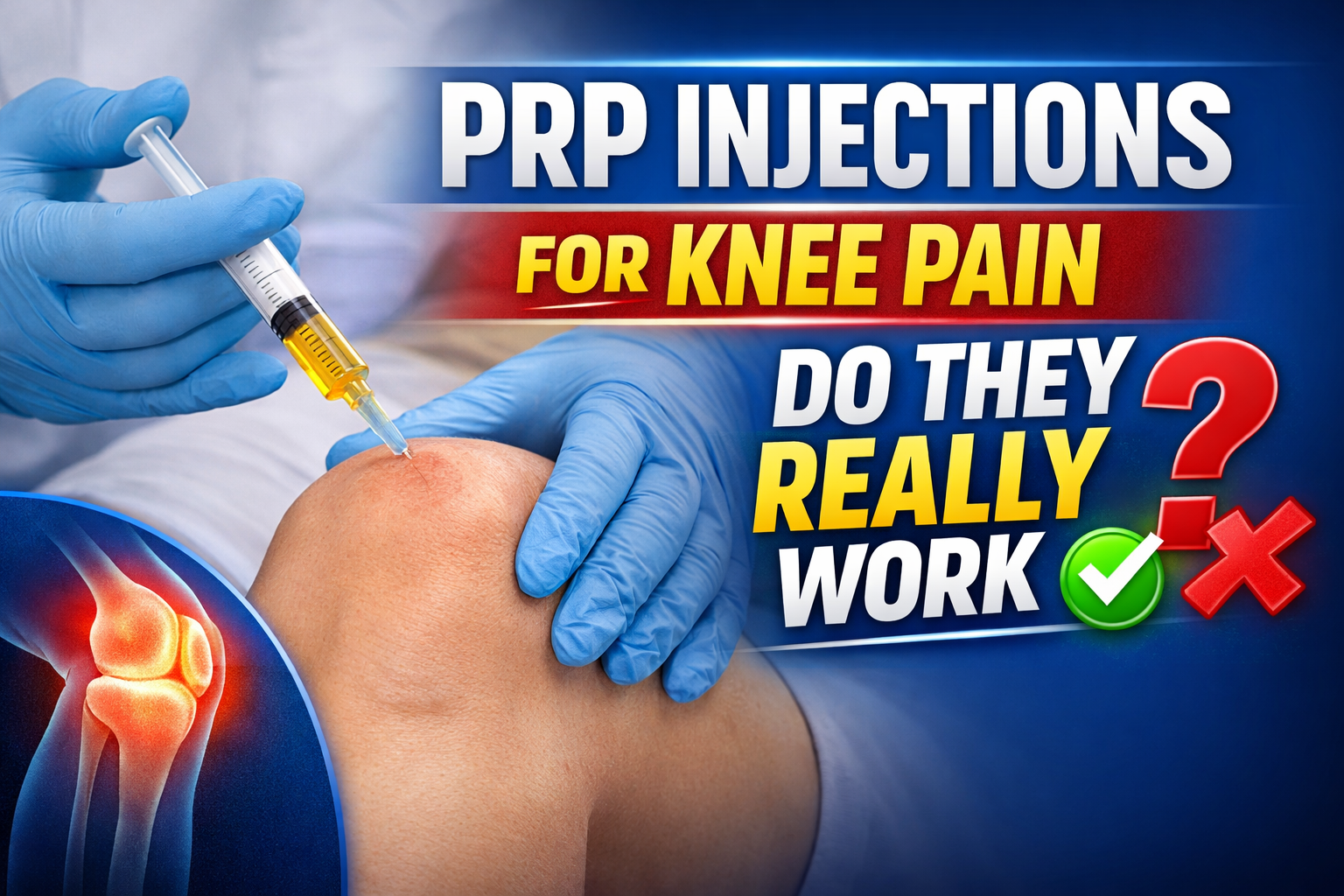
Knee pain is one of the most common orthopedic problems affecting adults of all ages. Whether caused by aging, sports injuries, or early arthritis, persistent knee pain can limit daily activities and reduce quality of life. In recent years, PRP injections for knee pain have gained popularity as a non-surgical treatment option. But the big question remains — Do they really work?
What Are PRP Injections?
PRP stands for Platelet-Rich Plasma. It is a treatment derived from your own blood.
Here’s how it works:
- A small amount of blood is drawn from your arm.
- The blood is placed in a centrifuge machine to separate platelets.
- The concentrated platelet-rich plasma is injected into the affected knee joint.
Platelets contain growth factors that help in tissue repair and reduce inflammation.
How PRP Helps in Knee Pain
PRP injections are commonly used for:
- Early to moderate knee osteoarthritis
- Ligament injuries
- Tendon inflammation
- Mild cartilage damage
PRP works by:
- Reducing inflammation
- Stimulating natural healing
- Slowing cartilage degeneration
- Improving joint lubrication
Unlike steroid injections, PRP focuses on healing rather than just temporary pain relief.
PRP for Knee Osteoarthritis
Knee osteoarthritis is one of the main reasons people consider PRP.
In early-stage arthritis:
- PRP may reduce pain
- Improve mobility
- Delay the need for knee replacement surgery
In advanced arthritis:
- Results may be limited
- Structural damage cannot be reversed completely
So, PRP is more effective in early to moderate cases.
How Effective Are PRP Injections?
Clinical studies suggest:
- Many patients experience pain relief for 6–12 months
- Some report improvement after 2–3 weeks
- Results vary depending on age, severity, and lifestyle
It is important to understand that PRP is not a magic cure, but it can significantly reduce symptoms in the right candidates.
Who Is a Good Candidate for PRP?
You may benefit from PRP if:
- You have mild to moderate knee arthritis
- You are below 60 years (better response generally)
- You want to delay surgery
- You have chronic tendon or ligament pain
PRP may not be suitable if:
- You have severe bone-on-bone arthritis
- You have blood disorders
- You have active infection
A consultation with an orthopedic specialist is essential before deciding.
Procedure & Recovery
- Procedure time: 20–30 minutes
- Mild swelling for 1–2 days
- Avoid heavy activity for 1 week
- Physiotherapy may improve results
Most patients can resume routine work within 24–48 hours.
Are There Any Side Effects?
Since PRP uses your own blood, risks are minimal. Possible temporary effects include:
- Mild swelling
- Injection site pain
- Temporary stiffness
Serious complications are rare.