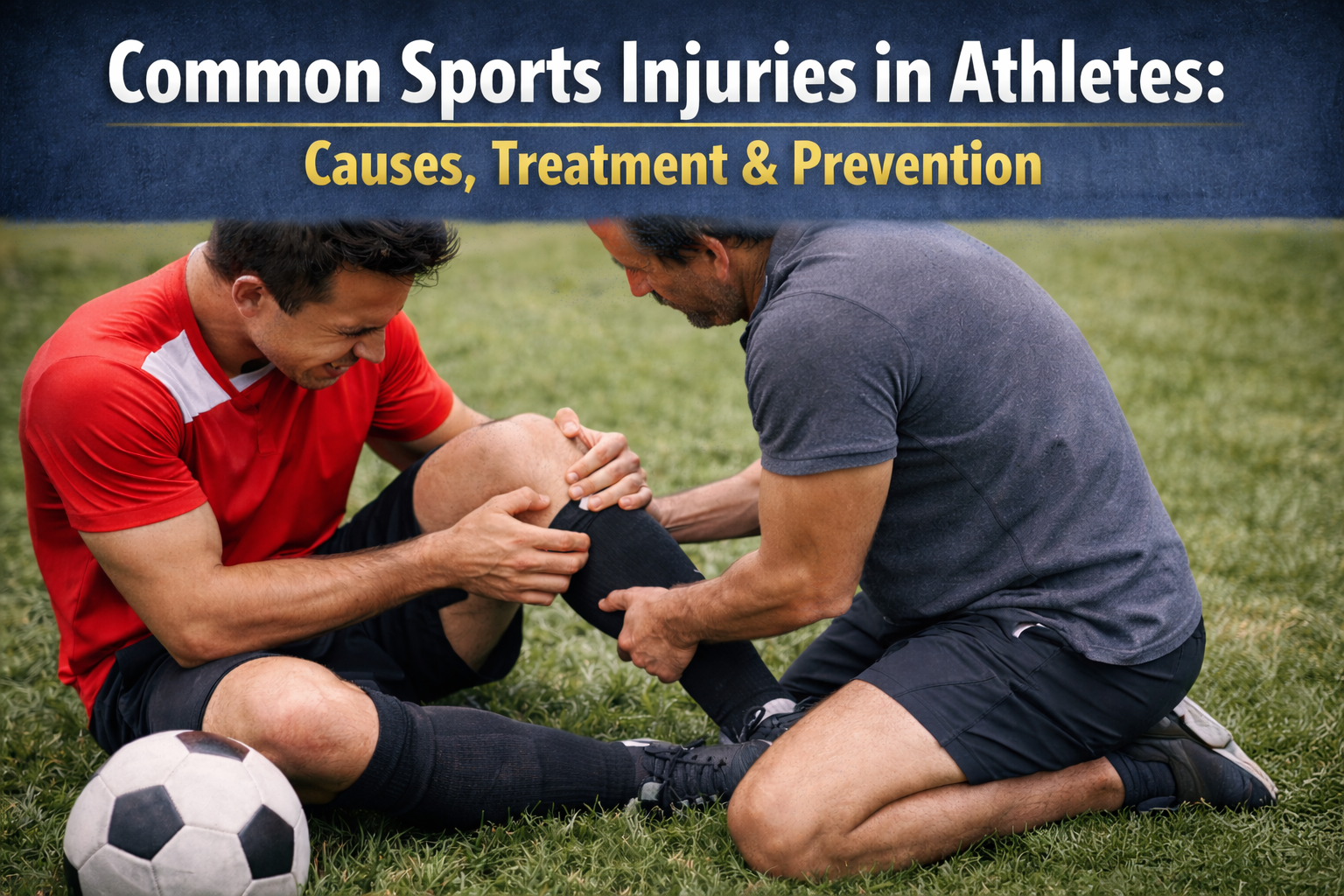
Sports and physical activity improve strength and endurance, but they also increase the risk of injury. Understanding sports injuries helps athletes return to play safely and avoid long-term complications. Early diagnosis and expert care are key to optimal recovery.
Why Athletes Get Injured
Athletic injuries usually occur due to:
Overuse from repetitive movements
Poor technique or inadequate training
Muscle imbalance and lack of flexibility
Inadequate warm-up and recovery time
Sudden impact or collision during play
These factors commonly affect both amateur and professional players.
Most Common Sports Injuries in Athletes
1. Ligament Injuries
Damage to stabilizing tissues such as the ACL often results from sudden twisting or impact. Symptoms include swelling, instability, and pain around the joint.
2. Muscle Strains
A muscle strain occurs when fibers are overstretched or torn, commonly affecting hamstrings and calves. Pain increases with movement and improves with rest.
3. Tendon Problems
Repetitive stress can lead to tendonitis, causing localized pain and stiffness, especially in shoulders, elbows, and knees.
4. Bone Injuries
Stress fractures develop from repeated loading without adequate rest. Athletes experience deep pain that worsens with activity.
5. Joint Injuries
The rotator cuff injury is frequent in throwing sports, leading to weakness, restricted motion, and shoulder discomfort.
Causes Behind These Injuries
Sudden increase in training intensity
Improper footwear or equipment
Fatigue and poor conditioning
Previous injury without complete healing
Understanding causes helps in effective injury prevention strategies.
Treatment Options
Treatment depends on injury severity:
Rest, ice, compression, and elevation
Physiotherapy and guided rehabilitation
Medications to reduce pain and inflammation
In advanced cases, sports injury treatment may include injections or surgery
Prompt care reduces downtime and prevents chronic problems.
Prevention Tips for Athletes
Follow a structured sports rehabilitation program
Maintain flexibility and core strength
Use sport-specific conditioning routines
Schedule adequate recovery days
Seek periodic orthopedic consultation for screening
When to See a Specialist
Persistent pain, swelling, or reduced performance needs expert evaluation. Consult our Best Orthopedic Surgeon in Dr Harish Kattamudi for accurate diagnosis and personalized care.
Conclusion
Sports injuries are common but manageable with early recognition, proper treatment, and guided rehabilitation. Athletes who prioritize recovery maintain long-term performance and joint health.
Preventive training, correct technique, and expert supervision significantly reduce injury risk. Professional guidance ensures safe return to sport and sustained athletic success.