
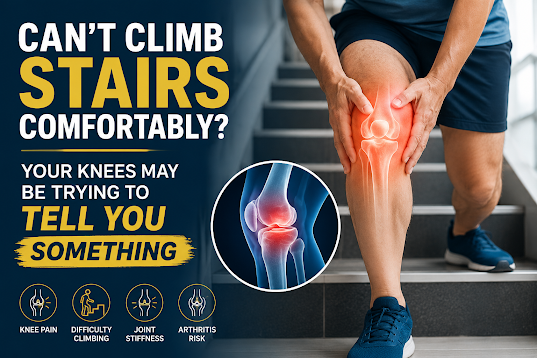
Climbing stairs is something most people do every day without thinking twice. But when your knees start hurting while going upstairs, coming downstairs, or even standing up after sitting for a while, it may be more than simple tiredness. Your body could be warning you about an underlying knee problem that should not be ignored.
Many people delay treatment, hoping the pain will disappear on its own. Unfortunately, untreated knee problems can gradually worsen and affect mobility, independence, and overall quality of life.
Why Do Knees Hurt While Climbing Stairs?
Your knee joint handles a large amount of pressure every time you climb stairs. In fact, stair climbing puts more stress on the knees than normal walking. If the cartilage, ligaments, or surrounding muscles become weak or damaged, pain can begin to appear during movement.
Common reasons for knee pain while climbing stairs include:
1. Osteoarthritis
Osteoarthritis is one of the most common causes of knee pain in adults. It occurs when the protective cartilage inside the knee gradually wears away, causing pain, stiffness, swelling, and reduced movement.
Symptoms may include:
- Knee stiffness in the morning
- Cracking or grinding sounds
- Pain while climbing stairs
- Difficulty walking long distances
2. Patellofemoral Pain Syndrome
This condition causes pain around the kneecap and is common in young adults, athletes, and people who frequently use stairs.
The pain usually becomes worse when:
- Climbing stairs
- Squatting
- Sitting for long periods
- Running or jumping
3. Ligament or Meniscus Injuries
Sports injuries, sudden twists, or falls can damage the ACL, PCL, or meniscus inside the knee joint. These injuries often cause instability, swelling, and pain during movement.
4. Weak Muscles and Poor Joint Support
Weak thigh muscles can place extra pressure on the knees. Lack of exercise, obesity, and prolonged sitting may increase stress on the joint over time.
Warning Signs You Should Never Ignore
Your knees may need medical attention if you notice:
- Persistent knee pain
- Swelling around the joint
- Difficulty climbing or descending stairs
- Knee locking or instability
- Stiffness after rest
- Clicking or grinding sounds
- Reduced range of motion
Ignoring these symptoms can lead to worsening joint damage and reduced mobility in the future.
How to Protect Your Knee Health
Simple lifestyle changes can help reduce knee strain and improve joint function.
Maintain a Healthy Weight
Excess body weight increases pressure on the knees, especially during stair climbing and walking.
Stay Physically Active
Low-impact exercises like walking, cycling, and swimming help strengthen the muscles around the knee joint.
Strengthen Supporting Muscles
Exercises for the quadriceps, hamstrings, and calf muscles improve knee stability and reduce stress on the joint.
Avoid Overloading the Knee
Repeated jumping, improper posture, and sudden twisting movements may worsen knee problems.
Don’t Ignore Early Symptoms
Early diagnosis can prevent serious complications and help avoid surgery in some cases.
When Should You See an Orthopedic Specialist?
You should consult an orthopedic doctor if:
- Knee pain lasts more than a few weeks
- Walking or climbing stairs becomes difficult
- Pain affects your daily activities
- Swelling or instability continues
- Home remedies are not helping
Modern orthopedic treatments now include advanced physiotherapy, minimally invasive procedures, ligament reconstruction, and even robotic knee replacement surgery for severe arthritis cases.