
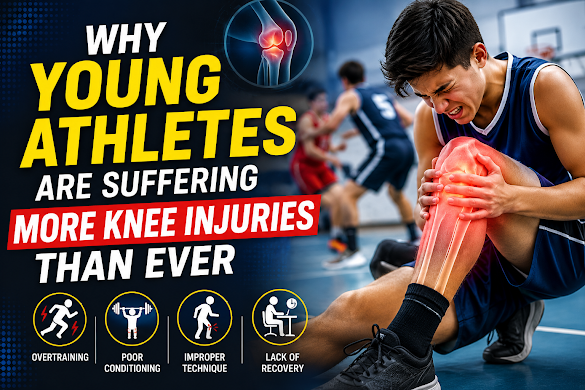
Knee injuries, once considered a problem mainly affecting professional athletes, are now becoming increasingly common among teenagers and young adults. From football and cricket to basketball and running, more young athletes are experiencing painful injuries that can keep them away from the sports they love.
Understanding why these injuries are happening and how to prevent them is essential for maintaining long-term joint health and athletic performance.
Why Are Knee Injuries Increasing?
1. Early Sports Specialization
Many young athletes focus on a single sport from an early age. Repeating the same movements throughout the year places excessive stress on the knees and increases the risk of overuse injuries.
Common problems include:
- Patellar tendonitis (Jumper’s Knee)
- Meniscus tears
- Stress injuries
- Cartilage damage
2. Increased Training Intensity
Competitive sports have become more demanding than ever. Young players often participate in multiple tournaments, coaching camps, and practice sessions with very little recovery time.
Without adequate rest, muscles become fatigued, reducing stability around the knee and making injuries more likely.
3. Weak Muscles and Poor Conditioning
Strong muscles help protect the knee joint. Weakness in the quadriceps, hamstrings, glutes, and core muscles can increase stress on the knee and lead to injuries.
Poor conditioning can contribute to:
- ACL tears
- Patellofemoral pain syndrome
- Ligament sprains
- Muscle strains
4. Improper Technique
Incorrect jumping, landing, cutting, or pivoting techniques place abnormal forces on the knee joint. Athletes who lack proper coaching may unknowingly increase their injury risk.
5. Overuse and Lack of Recovery
Young athletes often push through pain and continue training without allowing their bodies enough time to recover.
Warning signs should never be ignored:
- Persistent knee pain
- Swelling
- Clicking or locking sensation
- Instability or giving way
- Difficulty running or jumping
Common Knee Injuries Seen in Young Athletes
ACL Tears
The anterior cruciate ligament (ACL) provides stability to the knee. Sudden twisting movements, awkward landings, and rapid direction changes can cause ACL injuries.
Meniscus Tears
The meniscus acts as a cushion between the thigh bone and shin bone. Twisting injuries during sports can damage this cartilage.
Patellar Tendonitis (Jumper’s Knee)
Repeated jumping and running place stress on the tendon below the kneecap, leading to pain and inflammation.
Runner’s Knee
Pain around the front of the knee is common in athletes involved in running, cycling, and jumping sports.
Growth Plate Injuries
Because bones are still developing in children and adolescents, excessive stress can affect the growth plates and lead to long-term problems.
Signs You Shouldn’t Ignore
Seek medical attention if your child or athlete experiences:
✅ Persistent pain lasting more than a few days
✅ Swelling around the knee
✅ Popping sensation during injury
✅ Knee instability or buckling
✅ Inability to bear weight
✅ Limited range of motion
Early diagnosis can help prevent more serious complications.
How to Prevent Knee Injuries
Warm Up Properly
Always begin exercise with stretching and dynamic warm-up activities to prepare the muscles and joints.
Strength Training
Strengthening the quadriceps, hamstrings, glutes, and core improves knee stability and reduces injury risk.
Avoid Overtraining
Schedule rest days and avoid year-round participation in a single sport.
Learn Proper Techniques
Professional coaching helps athletes develop safe jumping, landing, and movement patterns.
Wear Appropriate Footwear
Proper shoes provide support and reduce stress on the knees.
Listen to Your Body
Pain is a warning sign—not something to ignore.