
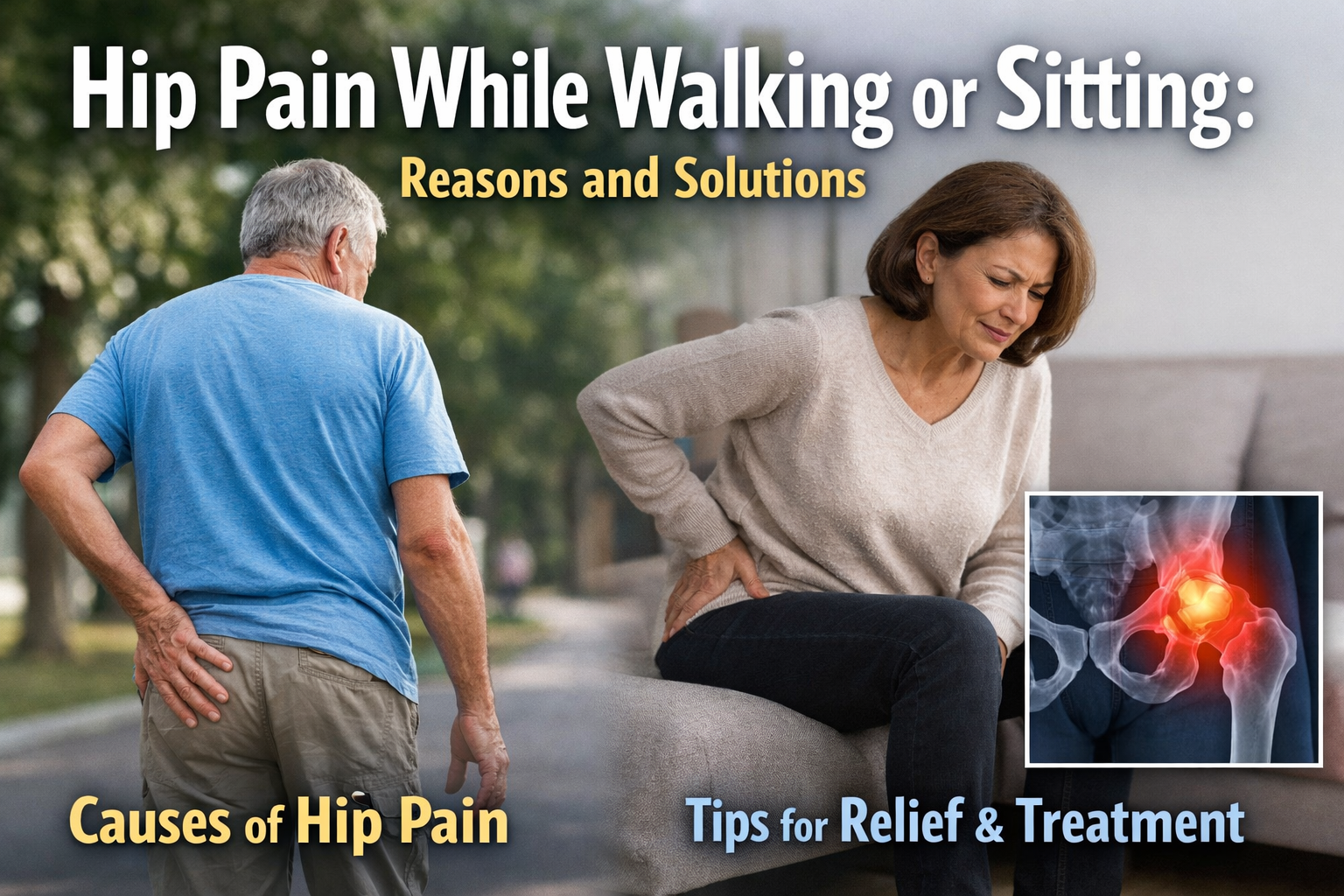
Hip pain while walking or sitting is a common condition that affects mobility, posture, and daily comfort. It can develop suddenly due to injury or gradually because of wear and tear. Identifying the cause early helps prevent long-term joint damage and improves quality of life.
Common Reasons for Hip Pain While Walking or Sitting
Hip discomfort may originate from bones, muscles, tendons, or surrounding structures. Some causes worsen with movement, while others increase during prolonged sitting.
1. Muscle Strain or Overuse
Excessive physical activity, poor posture, or sudden movements can strain hip muscles, causing pain during walking or stiffness after sitting.
2. Hip Osteoarthritis
This degenerative joint condition leads to cartilage breakdown, resulting in pain, reduced flexibility, and difficulty with movement, especially after rest.
3. Bursitis
Inflammation of fluid-filled sacs near the hip joint can cause sharp pain when walking, climbing stairs, or sitting on hard surfaces.
4. Sciatic Nerve Irritation
Compression of the sciatic nerve may cause hip pain radiating to the leg, often worsening while sitting for long periods.
5. Hip Labral Tear
Damage to the cartilage rim of the hip socket can cause clicking, stiffness, and pain during walking or changing positions.
Symptoms That Should Not Be Ignored
- Pain that increases with movement
- Stiffness after sitting
- Reduced range of motion
- Swelling or tenderness
- Pain radiating to the thigh or lower back
Effective Solutions for Hip Pain
Lifestyle and Home Care
- Rest and activity modification
- Maintaining healthy body weight
- Using ergonomic chairs
Physical Therapy and Exercises
Targeted stretching and strengthening exercises improve joint stability and reduce pain.
Medical Treatment
Anti-inflammatory medications, guided injections, or imaging tests may be required based on severity.
Advanced Care Options
In severe cases, minimally invasive procedures or surgical intervention may be recommended.
Prevention Tips for Long-Term Hip Health
- Warm up before physical activity
- Avoid prolonged sitting without breaks
- Maintain proper posture
- Strengthen core and hip muscles
- Wear supportive footwear
Conclusion
Hip pain while walking or sitting can significantly affect daily activities, but early diagnosis and proper treatment can restore comfort and mobility. Understanding the underlying cause is the first step toward effective relief.
With timely care, lifestyle adjustments, and professional guidance, most people can manage hip pain successfully and prevent future complications.
Consult our Dr. Harish Orthocare for expert evaluation, accurate diagnosis, and personalized treatment to relieve hip pain and improve joint health.