An ACL injury is one of the most common knee injuries, especially among athletes and people involved in sports that require sudden changes in direction, jumping, or landing. One of the first questions people ask after an ACL tear is: “How long will it take to recover?”
The answer depends on the severity of the injury, whether surgery is required, your age and activity level, and how consistently you follow your rehabilitation program.
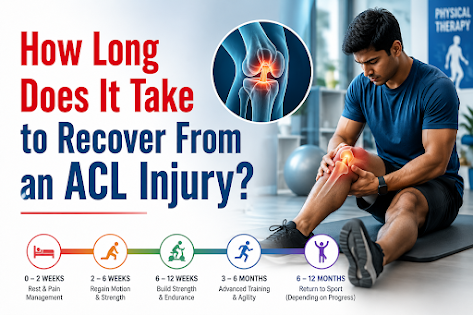
In general, ACL recovery can take several months, and recovery after ACL reconstruction surgery commonly takes around 6 to 12 months before returning to demanding sports. However, every patient’s recovery timeline is different.
What Is an ACL Injury?
The anterior cruciate ligament (ACL) is one of the major ligaments inside the knee. It helps stabilize the knee and prevents excessive forward movement and rotation of the shinbone.
An ACL injury can happen because of:
- Sudden twisting of the knee
- Changing direction quickly while running
- Landing awkwardly after a jump
- A sports-related collision
- Sudden stopping while running
- Falling or other traumatic injuries
A torn ACL may be a partial tear or a complete rupture.
How Long Does ACL Recovery Take?
There is no single recovery timeline for every ACL injury.
1. Mild or Partial ACL Injury
Some partial ACL tears may be treated without surgery, depending on knee stability, symptoms, activity level, and the patient’s goals.
Treatment may include:
- Rest and activity modification
- Ice and pain management
- Physical therapy
- Strengthening exercises
- Balance and stability training
- Gradual return to activities
Recovery may take several weeks to a few months, depending on the injury and rehabilitation progress.
2. ACL Reconstruction Surgery
For patients with a complete ACL tear, significant knee instability, or a desire to return to pivoting sports, ACL reconstruction may be recommended.
Recovery after ACL surgery is a gradual process and commonly takes 6–12 months or longer for a safe return to high-demand sports.
Importantly, being able to walk normally does not mean the knee is ready for sports. The ligament graft and surrounding muscles need time to heal and regain strength.
ACL Recovery Timeline: What to Expect
First 1–2 Weeks: Protecting the Knee
The initial focus is on controlling swelling and pain and restoring basic knee movement.
Your rehabilitation may include:
- Reducing swelling
- Regaining knee extension and flexion
- Activating the thigh muscles
- Improving walking ability
- Beginning gentle exercises
Weeks 2–6: Building Strength
As the knee improves, rehabilitation becomes more focused on rebuilding muscle strength and improving movement.
Exercises may include:
- Leg strengthening
- Stationary cycling
- Balance exercises
- Controlled squats
- Range-of-motion exercises
The exact exercises should be guided by your orthopedic specialist or physiotherapist.
6–12 Weeks: Improving Strength and Stability
At this stage, many patients work on improving muscle control, balance, coordination, and overall knee stability.
The goal is to gradually increase functional activity without placing excessive stress on the recovering knee.
3–6 Months: Functional Training
Depending on recovery, rehabilitation may progress toward more advanced activities such as:
- Dynamic balance exercises
- Agility training
- Sport-specific movements
- Controlled jumping and landing exercises
- Advanced strength training
Not every patient should progress at the same speed. Rehabilitation should be based on objective recovery milestones rather than simply the number of months since surgery.
6–12 Months: Return to Sport
Athletes may gradually begin sport-specific training and eventually return to competition when they meet appropriate strength, movement, stability, and functional criteria.
Returning to sports too early can increase the risk of reinjury.
What Factors Affect ACL Recovery Time?
Several factors can influence how quickly you recover from an ACL injury:
Severity of the Injury
A partial ACL injury may recover differently from a complete tear. Additional injuries to the meniscus, cartilage, or other ligaments can also affect recovery.
Type of Treatment
Recovery timelines vary depending on whether the injury is treated conservatively or with ACL reconstruction surgery.
Rehabilitation
A structured rehabilitation program is one of the most important parts of ACL recovery. Skipping exercises or returning to activity too quickly can delay recovery.
Muscle Strength
Strong quadriceps, hamstrings, hips, and core muscles help support knee function and stability.
Individual Factors
Age, fitness level, overall health, activity demands, and previous injuries can all influence recovery.
Can You Walk After an ACL Tear?
Some people can walk after an ACL injury, while others experience significant pain, swelling, or a feeling that the knee is giving way.
Being able to walk does not necessarily mean the ACL is healthy.
If you experience knee instability, swelling after an injury, difficulty bearing weight, or a popping sensation during an injury, an orthopedic evaluation is recommended.
When Can You Return to Sports After ACL Surgery?
Returning to sports should not be based on time alone.
Before returning to high-impact or pivoting sports, your orthopedic specialist and rehabilitation team may assess:
- Knee stability
- Range of motion
- Muscle strength
- Balance and coordination
- Jumping and landing mechanics
- Sport-specific performance
- Confidence in the injured knee
A gradual return-to-sport program can help reduce the risk of reinjury.
How Can You Speed Up ACL Recovery?
You cannot safely force the ACL to heal faster, but you can support a successful recovery by following your treatment plan.
Follow Your Rehabilitation Program
Attend physiotherapy sessions and perform your prescribed exercises consistently.
Don’t Rush Your Recovery
Feeling better does not always mean that your knee is fully recovered. Follow your specialist’s guidance before increasing activity.
Strengthen the Supporting Muscles
Building strength in the quadriceps, hamstrings, hips, and core can improve knee function.
Maintain a Healthy Weight
Maintaining a healthy body weight can reduce unnecessary stress on the knee.
Follow Your Return-to-Sport Plan
If you are an athlete, gradually progress from rehabilitation to sport-specific training and eventually competition.
When Should You See an Orthopedic Specialist?
You should consider an orthopedic evaluation after a significant knee injury, especially if you experience:
- A popping sensation at the time of injury
- Rapid knee swelling
- Difficulty walking
- Knee instability or “giving way”
- Persistent pain
- Limited knee movement
- Difficulty returning to normal activities
An orthopedic specialist can evaluate the knee and determine whether imaging, physiotherapy, or surgical treatment may be appropriate.